
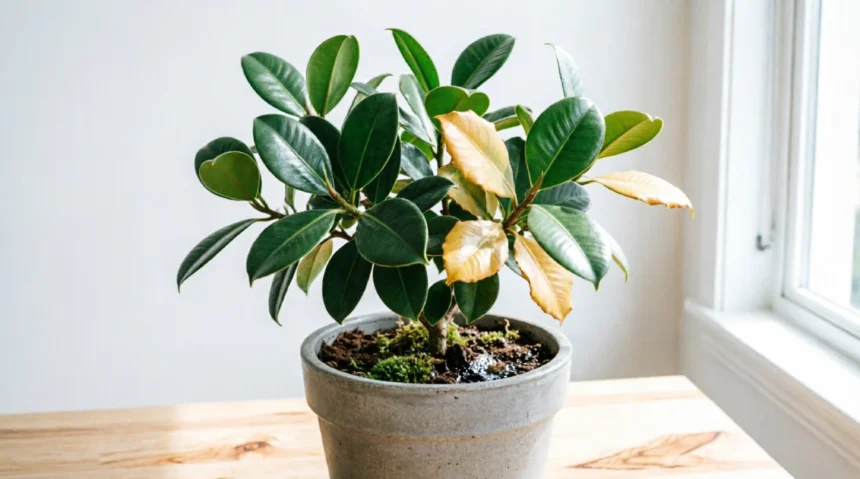
There’s a particular sinking feeling every plant parent knows — you glance over at your Monstera or Fiddle Leaf Fig and spot it: a leaf gone fully, unmistakably yellow. Your first instinct is to water it more, or maybe water it less, or move it to a sunnier spot. But without knowing why it’s happening, you’re essentially guessing.
- What Yellow Leaves Are Actually Telling You (And Why It’s Not Always Bad News)
- The 8 Most Common Causes of Yellow Leaves on Indoor Plants
- Overwatering — The #1 Killer of Australian Indoor Plants
- Underwatering and Dry Air — A Hidden Winter Problem
- Too Much or Too Little Light
- Nutrient Deficiencies — Especially Nitrogen and Iron
- Root-Bound Plants and Poor Potting Mix
- Pests — Fungus Gnats, Spider Mites, and Scale
- Temperature Stress and Cold Draughts
- Natural Ageing — When Yellowing Is Just Part of Life
- The Australian Factor — How Your Climate and Water Are Affecting Your Plants
- Hard Water in Perth and Adelaide — Is Your Tap Water Hurting Your Plants?
- Humidity, Rainfall, and Soil Moisture Across Climate Zones
- Australian Native vs Imported Tropical Plants Indoors
- Diagnose It in 60 Seconds — Yellow Leaf Troubleshooting Decision Tree
- How to Fix Yellow Leaves — Plant-by-Plant Action Plan
- Monstera — Fixing Yellowing Caused by Overwatering and Root Rot
- Fiddle Leaf Fig — Addressing Light, Watering, and Mineral Sensitivity
- Peace Lily and ZZ Plant — Low-Maintenance Plants That Still Turn Yellow
- Snake Plant — When “Indestructible” Still Gets Yellow
- When to Call It — How to Know If Your Plant Is Beyond Saving
- Seasonal Indoor Plant Care Calendar for Australian Climate Zones
- Summer Care (December–February) — Managing Humidity, Heat, and Overwatering Risk
- Autumn and Winter Care (April–August) — The Underwatering and Heating Trap
- Spring (September–November) — The Best Window for Recovery and Repotting
- Common Mistakes Australian Plant Parents Make (And How to Avoid Them)
- FAQs
- Why are the bottom leaves of my indoor plant turning yellow?
- Can yellow leaves turn green again?
- How often should I water my indoor plants in a hot Australian summer?
- Is hard water causing my plant’s yellow leaves in Perth or Adelaide?
- What’s the best fertiliser for yellow indoor plants in Australia?
- Your Plants Are Talking — Now You Know How to Listen
Indoor plants with yellow leaves are one of the most common complaints from plant parents across Australia, and the frustrating truth is that yellowing can mean at least eight different things. The good news? Most causes are completely fixable once you know what you’re looking at.
This guide covers every likely cause, a simple decision tree to help you diagnose the problem fast, and plant-specific action plans tailored to Australian homes, climates, and conditions. Whether you’re in a humid Brisbane apartment or a heated Melbourne terrace in July, the answer is in here.
What Yellow Leaves Are Actually Telling You (And Why It’s Not Always Bad News)
When a leaf turns yellow, it’s lost chlorophyll — the pigment responsible for photosynthesis and that deep, healthy green colour. Chlorophyll loss happens when something disrupts the plant’s ability to function normally, whether that’s waterlogged roots, poor light, pest damage, or simple old age.
Here’s the important distinction: not all yellowing is a crisis. A single lower leaf going yellow on a Monstera or Peace Lily is often just natural ageing — the plant redirecting energy from older growth toward new leaves. That’s completely normal.
What isn’t normal is yellowing that spreads across multiple leaves quickly, affects newer growth, or appears alongside soft stems, soggy soil, or visible pests. Those are the signs to act on. The sections below will help you work out exactly which one you’re dealing with.
The 8 Most Common Causes of Yellow Leaves on Indoor Plants
Overwatering — The #1 Killer of Australian Indoor Plants
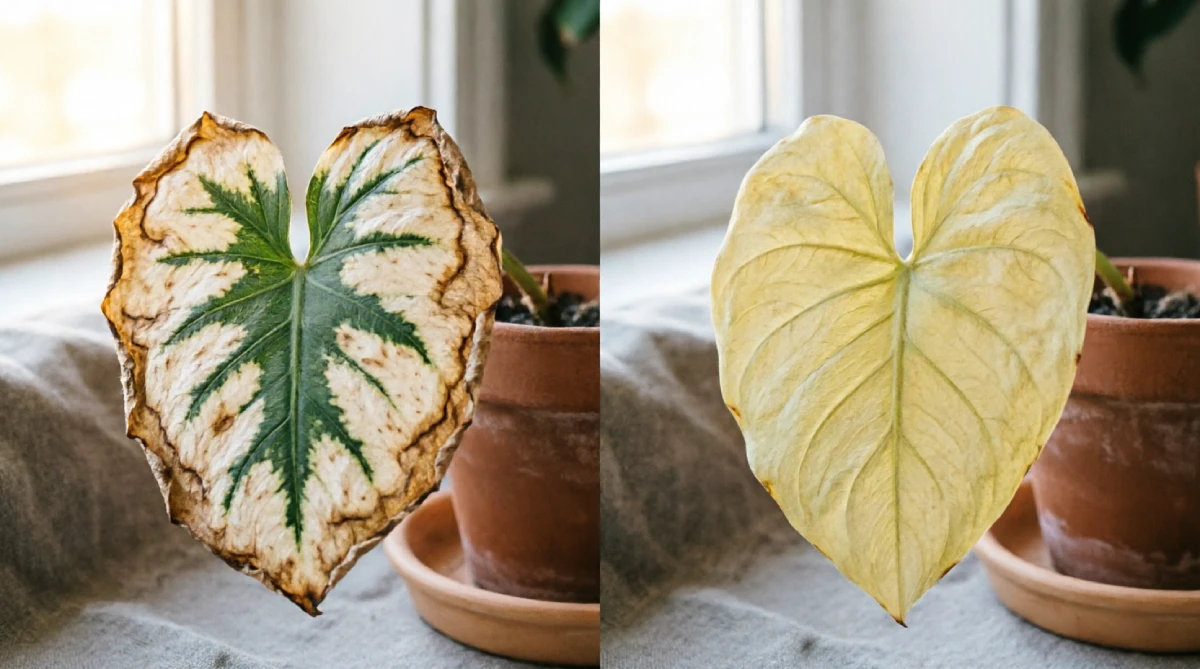
Overwatering is the most common cause of indoor plants’ yellow leaves in Australia, and it’s easier to do than you’d think. When soil stays wet for too long, roots are starved of oxygen, begin to rot, and lose the ability to absorb water and nutrients — even though there’s plenty of both in the pot. The result is yellowing leaves that look almost identical to underwatering.
In coastal Queensland and New South Wales, summer humidity means potting mix holds moisture for far longer than it would in a drier climate. Watering on a fixed schedule — say, every Sunday regardless of soil conditions — is a recipe for root rot. Instead, use the finger test: push your finger about 5cm into the soil. Water only when the top third feels dry. A lighter pot than usual is another reliable sign it’s time to water. Peace Lilies and ZZ Plants are particularly prone to overwatering damage.
Underwatering and Dry Air — A Hidden Winter Problem
Underwatering tends to show up differently — yellowing usually starts at the tips and edges of leaves rather than spreading across the whole leaf. The soil will be bone dry, and the plant may look slightly wilted or limp.
This becomes a genuine problem in Melbourne and Sydney apartments during winter, where gas heating and ducted systems strip moisture from indoor air rapidly. Snake Plants and Fiddle Leaf Figs tend to suffer quietly before the symptoms become obvious. If your plant is near a heater or heating vent, check the soil more frequently — it’s drying out faster than you realise.
Too Much or Too Little Light
Light-related yellowing has two distinct patterns. Too much direct sun causes bleached, crispy patches — often on one side of the leaf that faces the window. Too little light produces a pale, uniform fading across the whole leaf, usually accompanied by slow or no new growth.
Australian homes with north-facing windows receive the strongest, most consistent light — which suits sun-tolerant plants like Snake Plants, but can damage shade-lovers like Peace Lilies and ZZ Plants placed too close to the glass. Bright indirect light (where a plant receives reflected or filtered light without direct sun hitting the leaves) is the sweet spot for the most popular indoor varieties.
Nutrient Deficiencies — Especially Nitrogen and Iron
Potting mix doesn’t stay nutrient-rich forever. After about 6–12 months, it loses much of its available nitrogen, iron, and magnesium — and that’s when you start seeing yellowing that fertiliser alone can fix. Nitrogen deficiency typically starts on older, lower leaves; iron and magnesium deficiency tend to affect newer growth first.
A balanced slow-release fertiliser, available at Bunnings or your local nursery, applied during spring and summer, will address most deficiencies. Avoid fertilising in winter when most indoor plants are dormant — it pushes stressed growth the plant can’t support.
Root-Bound Plants and Poor Potting Mix
When a plant has outgrown its pot, its roots circle the bottom and sides with nowhere to go. This restricts water and nutrient uptake and causes steady yellowing even when your care routine seems fine. Tip the plant gently — if roots are circling the base of the root ball or poking through drainage holes, it’s time to repot into a pot one size larger.
Potting mix quality matters too. Cheap, heavy bulk soils sold in large bags are often formulated for outdoor garden beds, not indoor containers. They compact over time, retain too much moisture, and suffocate roots. For Monsteras, Fiddle Leaf Figs, and Peace Lilies, look for a well-draining indoor or premium potting mix at Bunnings or a specialised nursery.
Pests — Fungus Gnats, Spider Mites, and Scale
Pest damage is frequently mistaken for a watering problem because the symptoms look almost identical. Spider mites, fungus gnats, and scale insects all disrupt sap flow and nutrient uptake, leading to yellowing, stippling, or pale, washed-out leaves.
Spider mites thrive in dry, heated indoor air — a common winter condition in Melbourne and Canberra homes. Check the undersides of leaves carefully; spider mites leave fine webbing, while scale appears as small brown bumps along stems. Neem oil spray and insecticidal soap (both widely available at Bunnings) are effective, low-toxicity treatments. Repeat applications every 5–7 days until the infestation clears.
Temperature Stress and Cold Draughts
Tropical houseplants didn’t evolve for Australian winters, and sudden temperature shifts can cause localised yellowing — often on leaves closest to a cold window or door gap. Monsteras and Peace Lilies are particularly sensitive, preferring temperatures above 15°C consistently.
This is especially worth watching in Melbourne, the highlands of NSW, and Tasmania, where winter nights drop significantly. Keep tropical plants away from single-glazed windows, exterior doors, and air-conditioning vents. If your plant is near a spot that gets cold at night, move it a metre or two toward the centre of the room.
Natural Ageing — When Yellowing Is Just Part of Life
Sometimes a yellow leaf is just a yellow leaf. As plants grow upward and outward, they naturally shed older, lower leaves that are no longer receiving enough light to be productive. This is completely normal in Monsteras, Peace Lilies, and Snake Plants, and no cause for concern on its own.
The key tell is where the yellowing is happening and how fast it’s spreading. One lower leaf yellowing slowly over a week or two? Natural ageing. Three leaves yellowing across different parts of the plant within a few days? Something else is going on.
The Australian Factor — How Your Climate and Water Are Affecting Your Plants
Hard Water in Perth and Adelaide — Is Your Tap Water Hurting Your Plants?
Perth and Adelaide have some of the hardest tap water in Australia — meaning it contains elevated levels of calcium, magnesium, and chlorine. For most household uses, this is a minor inconvenience. For sensitive indoor plants, particularly Fiddle Leaf Figs and Peace Lilies, it can cause gradual problems over time.
When high-mineral water is used repeatedly, minerals accumulate in the potting mix, raising soil pH and locking out nutrients the plant can no longer absorb — producing yellowing that looks exactly like a deficiency. You may also notice white crusty deposits on the soil surface or around drainage holes.
Practical fixes: let tap water sit in an open container overnight before watering, which allows chlorine to off-gas. Collect rainwater where possible — it’s soft, pH-neutral, and plants love it. Every few months, flush the soil thoroughly by watering until water runs freely from the drainage holes, which helps clear accumulated minerals. WaterCorp (WA) and SA Water both publish water quality reports online if you want to check your suburb’s specific mineral content.
Humidity, Rainfall, and Soil Moisture Across Climate Zones
The same watering advice cannot apply equally across a country as climatically diverse as Australia. A Brisbane plant parent watering twice a week during the wet season is likely overwatering; a Melbourne plant parent doing the same in July with the heating running might be watering just right — or possibly not enough.
Here’s a rough guide by climate zone:
- Tropical (QLD, NT): High ambient humidity during the wet season means soil retains moisture significantly longer. Check soil before every watering and expect to water less frequently than you think. Watch for fungal issues and pests, which thrive in warm, humid conditions.
- Subtropical (coastal NSW, SEQ): Warm summers with humidity spikes, mild winters. Adjust watering frequency seasonally — more frequent checks in summer, less in the cooler months.
- Temperate (VIC, NSW, TAS): The heating trap is real in winter. Warm, dry indoor air dries pots quickly despite cold outdoor temperatures. Check soil moisture more frequently in winter than you might expect.
- Arid/Semi-arid (inland WA, SA): Low humidity year-round means plants dry out faster. Water more frequently and consider adding a humidity tray for tropical varieties.
Australian Native vs Imported Tropical Plants Indoors
The most popular indoor plants in Australia — Monstera, Fiddle Leaf Fig, Peace Lily — are not native to this continent. They evolved in tropical rainforest conditions with high humidity, warm temperatures, and filtered light. In arid or temperate Australian homes, recreating those conditions takes deliberate effort.
If you’re in a dry-climate zone or a low-humidity apartment, hardier options like ZZ Plants and Snake Plants are far more forgiving. They tolerate low humidity, inconsistent watering, and lower light levels without the drama that a Fiddle Leaf Fig will put you through.
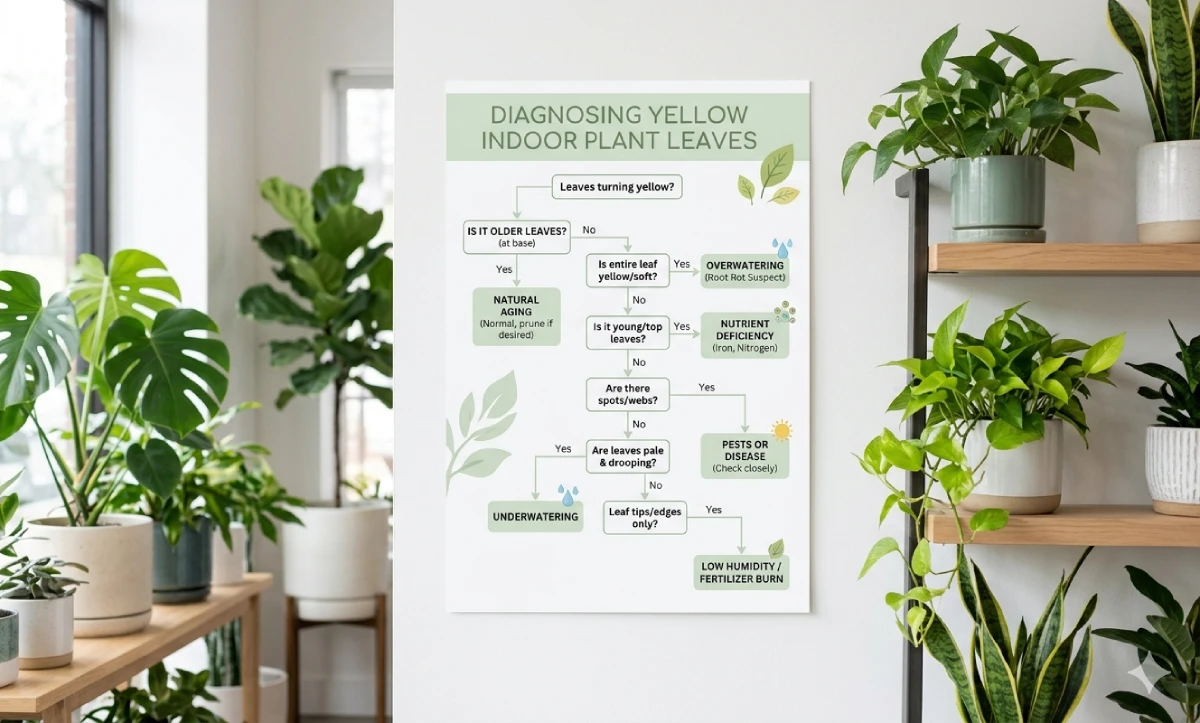
Diagnose It in 60 Seconds — Yellow Leaf Troubleshooting Decision Tree
Not sure what’s causing the yellowing? Work through these questions in order:
Q1: Is the soil wet, moist, or dry? → Wet or waterlogged: Likely overwatering or root rot. Check roots for brown, mushy damage. Go to the Monstera or relevant plant fix section. → Bone dry, pulling away from pot edges: Likely underwatering or heat/draught stress. Water thoroughly and check the plant’s position. → Moist and appropriate: Move to Q2.
Q2: Where on the plant is the yellowing happening? → Lower, older leaves only, one or two at a time: Probably natural ageing. Monitor but don’t panic. → Newer, upper leaves or spread across the plant: Could be a nutrient deficiency, pests, or a light issue. Move to Q3.
Q3: Check the leaves closely — do you see any of the following? → Fine webbing, tiny dots, or brown bumps: Pests. Treat with neem oil or insecticidal soap. → Bleached, crispy patches on one side: Too much direct sun. Move away from the window. → Uniform pale fading, slow growth: Too little light. Move to a brighter spot. → No visible damage, yellowing on newer leaves: Likely nutrient deficiency. Fertilise in the next growing season.
Q4: Has the plant recently been moved, repotted, or exposed to cold air? → Yes: Temperature or transplant stress. Give it 2–3 weeks in a stable spot before intervening further. → No: Revisit Q1 and Q3 — a combination of causes may be at play.
How to Fix Yellow Leaves — Plant-by-Plant Action Plan
Monstera — Fixing Yellowing Caused by Overwatering and Root Rot
If your Monstera has multiple yellowing leaves and the soil feels wet, act quickly. Remove the plant from its pot and check the roots — healthy roots are firm and white or light tan; rotted roots are brown, black, and mushy. Trim any rotted sections with clean scissors, let the roots air-dry for 30 minutes, then repot into fresh, well-draining indoor potting mix.
Going forward, water your Monstera only when the top 5cm of soil is dry. In humid Brisbane or coastal Sydney during summer, that might mean watering once every 10–14 days. In a heated Melbourne apartment in July, it could be every 5–7 days. Let your soil — not a calendar — guide you.
Fiddle Leaf Fig — Addressing Light, Watering, and Mineral Sensitivity
Fiddle Leaf Figs have a reputation for being reactive, and they’ve earned it. They do best in a stable position near a north-facing window with bright, indirect light — moving them regularly causes stress that shows up as brown-edged yellow leaves. If you’re in a hard-water area like Perth or Adelaide, switch to rainwater or let tap water sit overnight before use.
Yellowing patterns tell you a lot: brown spots spreading from the centre of a leaf suggest root rot; brown edges on a crispy leaf suggest dryness or low humidity; sudden yellowing near a window in winter often indicates cold draught exposure.
Peace Lily and ZZ Plant — Low-Maintenance Plants That Still Turn Yellow
Peace Lilies yellow most often from overwatering and low light — two problems that are easy to address together. Move the plant closer to a bright, indirect light source and reduce watering frequency. If the pot is sitting in a water-filled saucer, empty it after each watering session. Terracotta pots are worth considering in humid climates; they breathe and dry out faster than plastic or ceramic.
ZZ Plants are remarkably tough, but their one weakness is overwatering. Their rhizomes (thick underground stems) store water, meaning they genuinely need far less than you’d think. In most Australian homes, watering once every 2–3 weeks is sufficient. Yellow leaves on a ZZ Plant are almost always a sign of too much water, not too little.
Snake Plant — When “Indestructible” Still Gets Yellow
Snake Plants are often recommended as foolproof, and they mostly are — but even they will yellow under two conditions: chronic overwatering (leading to root rot) and cold draught exposure. In winter, reduce watering to once every 2–4 weeks. Keep them away from air-conditioning vents and cold windows. If leaves are yellowing at the base, check roots for rot and repot if necessary.
When to Call It — How to Know If Your Plant Is Beyond Saving
Sometimes, despite best efforts, a plant is too far gone. Signs it won’t recover include: roots that are completely black and mushy with no firm white sections remaining, a stem that’s collapsed or turned to mush at the base, and leaves that are dropping rapidly regardless of care. It’s not a failure — even experienced plant parents lose plants. Take a cutting if any healthy stems remain, and start fresh.
Seasonal Indoor Plant Care Calendar for Australian Climate Zones
Summer Care (December–February) — Managing Humidity, Heat, and Overwatering Risk
Summer is when Australian plant parents most commonly overwater, particularly in coastal QLD and NSW where high ambient humidity means soil holds moisture far longer than expected. The rule: always check before you water. During heat waves, you may need to mist tropical plants or move them away from western-facing windows that receive harsh afternoon sun.
Hold off fertilising during prolonged heat stress — plants in survival mode can’t process nutrients effectively. Wait for temperatures to stabilise before feeding. In tropical zones, watch for fungal issues and increased pest activity; improve air circulation around plants where possible.
Autumn and Winter Care (April–August) — The Underwatering and Heating Trap
The most common winter mistake is continuing a summer watering schedule in a heated home. As temperatures drop and heating systems run, indoor air becomes dry — but plant growth also slows, meaning roots absorb water more slowly. The result is soil that alternates between too dry (bad) and too wet (worse).
Tropical plants like Monstera and Peace Lilies will appreciate a pebble tray filled with water placed beneath the pot — as the water evaporates, it raises localised humidity without wetting the roots. A small humidifier near your plant corner is worth the investment if you have several humidity-loving varieties. Cut fertilising back significantly or stop entirely until spring.
Spring (September–November) — The Best Window for Recovery and Repotting
Spring is your reset button. As temperatures warm and daylight hours increase, plants shift back into active growth — making it the ideal time to repot root-bound plants, start a fresh fertilising schedule, and address any issues that developed over winter. If a plant has been yellowing slowly for months, watch for new growth emerging in September and October. Fresh green leaves are a reliable sign that recovery is underway.
Common Mistakes Australian Plant Parents Make (And How to Avoid Them)
The most persistent mistake is watering on a fixed schedule — every Sunday, regardless of what the soil is actually doing. Soil moisture varies by season, climate zone, pot material, and plant size. Your finger in the soil is always more reliable than a calendar.
Using outdoor garden soil or cheap bulk potting mix indoors is another common issue. These products are designed for garden beds with natural drainage, not closed containers. They compact, hold too much water, and create the exact anaerobic conditions that cause root rot.
Placing tropical plants in south-facing rooms — the lowest-light orientation in Australian homes — or near air-conditioning vents sets them up for chronic stress. Monsteras and Peace Lilies need bright, indirect light and stable temperatures to thrive.
Leaving plants sitting in water-filled saucers after watering is a slow-motion overwatering problem that’s easy to miss. Empty saucers within an hour of watering. And resist the urge to fertilise in winter when plants are dormant — excess fertiliser salts build up in soil and burn roots, causing the very yellowing you’re trying to fix.
Finally, in hard-water areas like Perth and Adelaide, using cold tap water straight from the tap on sensitive plants adds unnecessary mineral load over time. Let it sit overnight, or collect rainwater — your plants will show the difference within a few weeks.
FAQs
Why are the bottom leaves of my indoor plant turning yellow?
Lower, older leaves naturally yellow and drop as a plant focuses energy on new growth at the top. This is completely normal for Monsteras, Peace Lilies, and Snake Plants and doesn’t require any intervention. It becomes a concern only if yellowing is spreading rapidly upward or affecting multiple leaves at once.
Can yellow leaves turn green again?
No. Once a leaf has lost its chlorophyll, it won’t recover its green colour. The right move is to remove yellow leaves cleanly at the stem, which redirects the plant’s energy toward healthy growth. Focus on fixing the underlying cause so new leaves emerge healthy.
How often should I water my indoor plants in a hot Australian summer?
Rather than following a fixed schedule, check soil moisture every 2–3 days during summer. Push your finger 5cm into the potting mix — water only when the top third feels dry. In humid coastal climates, you’ll likely water less frequently than you expect; in dry inland areas, more often.
Is hard water causing my plant’s yellow leaves in Perth or Adelaide?
Hard water can contribute to yellowing over time by gradually raising soil pH and blocking nutrient absorption. If you’re in a hard-water area and your plant is yellowing despite correct watering and light, try switching to collected rainwater or water that’s been left to sit overnight. Flushing the soil every 2–3 months also helps clear mineral build-up.
What’s the best fertiliser for yellow indoor plants in Australia?
A balanced slow-release granular fertiliser applied in spring and summer is the safest starting point for most indoor plants. Liquid fertilisers diluted to half-strength are also effective during the growing season. Both are available at Bunnings and most local nurseries. One important caveat: don’t fertilise a stressed or root-rotted plant. Fix the root cause first — fertilising a sick plant does more harm than good.
Your Plants Are Talking — Now You Know How to Listen
Indoor plants’ yellow leaves are almost always a signal worth paying attention to, but with the right diagnostic process, they don’t have to be a mystery. Start with the decision tree, match the pattern to the most likely cause for your plant and your climate zone, then follow the relevant action plan. If you’re in Perth or Adelaide, check your water quality. If you’re in Melbourne or Sydney and it’s winter, check that heater proximity.
Most yellowing plants recover completely once the underlying problem is addressed. The fact that you’re looking into it means you’re already ahead. Your plant’s next flush of healthy green growth is closer than you think — bookmark this page, work through the checklist, and let us know how your plant bounces back.