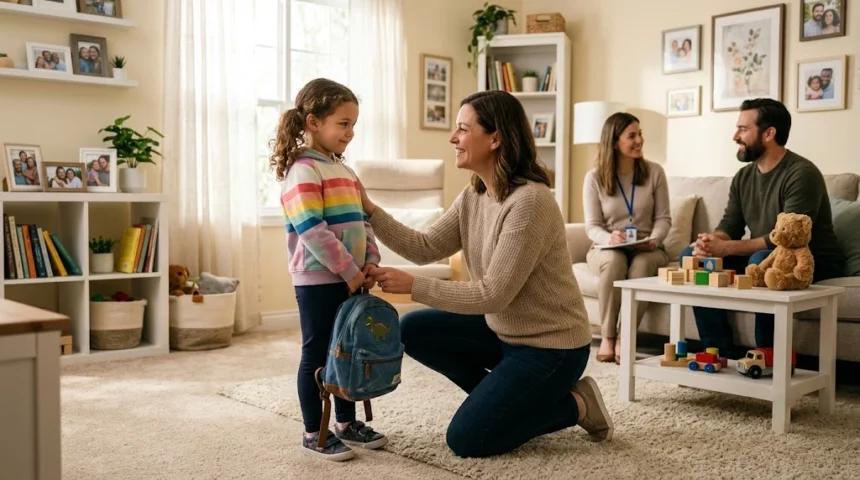
Foster care is a temporary system where children live with state-approved caregivers when their parents can’t safely care for them. A judge and child welfare agency oversee the child’s placement, and the main goal is usually reunification with the birth family, though adoption is sometimes the outcome.
Foster Care in Simple Terms
Foster care is a system built to protect kids. When a child’s home becomes unsafe, a state agency steps in and places that child with a caregiver who has been trained and approved to look after them. This caregiver is called a foster parent.
- Foster Care in Simple Terms
- Why Children Enter Foster Care
- How the Foster Care System Works
- Types of Foster Care Placements
- Who Can Become a Foster Parent
- The Emotional Side of Foster Care
- What Happens When Reunification Isn’t Possible
- Life for Kids in the Foster Care System
- Foster Care by the Numbers
- How You Can Help
The child doesn’t lose their family forever. Foster care is meant to be temporary. A judge and a caseworker stay involved the whole time, checking on the child’s safety and working toward a plan for their future. That plan often means going back home once things improve for the birth parents.
Some people think foster care is only for kids who got in trouble. That’s not true. Kids end up in foster care because of what happened to them, not because of anything they did wrong.
Why Children Enter Foster Care
Most children enter foster care because of neglect. A parent might be struggling with addiction, mental illness, poverty, or a lack of support, and the home stops being a safe place for a child to grow up. Abuse is another common reason. So is a parent’s illness, death, or time in jail.
Foster care is used when a child’s home becomes unsafe or unstable, generally in the event of abuse or neglect. A social worker usually gets involved after someone reports a concern about a child’s safety. The worker investigates, and if the home truly isn’t safe, the agency asks a judge for permission to remove the child.
Most kids who enter foster care will eventually return to a parent or primary caretaker. That’s the outcome caseworkers aim for from day one. Foster care isn’t meant to replace a family. It’s meant to hold things steady until that family can safely reunite.
How the Foster Care System Works
Once a child is removed from their home, the state takes legal custody. That means the government makes the big decisions about the child’s care, even though the foster parent handles daily life like meals, school, and bedtime routines.
Legal custody lies with the state, so foster parents can be restricted in making certain decisions for the child. A caseworker checks in regularly. Courts review the case every few months to see how things are progressing. Parents usually get a case plan with specific steps to complete, like finishing a treatment program or securing stable housing, before their child can come home.
Kids in foster care are also supposed to stay connected to their families during this process. Regular visits with parents and siblings help kids keep those bonds alive, even while they’re living somewhere else.
Types of Foster Care Placements
Not every foster placement looks the same. Some children live with relatives who step up to care for them, known as kinship care. This option keeps kids connected to people they already know and trust, which can make the transition less scary.
Other children go to live with trained foster families who aren’t relatives. These families open their homes and complete state licensing requirements before a child is placed with them. For children with more complex medical or behavioral needs, a group home or residential facility might be a better fit, at least for a while.
Younger children and infants are usually placed in family settings whenever possible. Group homes tend to serve older kids or those who need more specialized support than a typical household can offer.
Who Can Become a Foster Parent
Foster parents come from all kinds of backgrounds. You don’t need to own a big house or have raised kids before. Agencies look for adults who are stable, patient, and willing to complete training.
The process usually starts with an application, followed by a home study where a caseworker visits and asks questions about your life, your finances, and your reasons for wanting to foster. After that comes training, which prepares you for what to expect and how to support a child who has been through a hard time.
Foster parents are compensated for the costs of caring for a child, since raising kids isn’t free. This isn’t a paycheck for the caregiver. It covers food, clothing, and other basic needs so foster parents aren’t paying out of pocket to support a child who isn’t legally their own.
The Emotional Side of Foster Care
Every child who enters foster care has experienced some kind of loss. Even when a home was unsafe, it was still their home. Leaving behind parents, siblings, pets, and familiar surroundings is hard, no matter how young or old the child is.
That loss can show up in different ways. Some kids act out. Others withdraw. Many struggle with anxiety or have trouble trusting new adults, which makes sense given what they’ve been through. Good foster parents understand that behavior is often a response to trauma, not defiance for its own sake.
Patience matters more than perfection here. A foster child doesn’t need a flawless caregiver. They need someone steady who shows up day after day, even on the hard days.
What Happens When Reunification Isn’t Possible
Sometimes birth parents aren’t able to make the changes needed to bring their child home safely. When that happens, the court may end parental rights, and the child becomes legally free for adoption.
At that point, a foster family might choose to adopt the child themselves, a path known as foster-to-adopt. Other times, the child is matched with a different adoptive family through the agency. Adoption from foster care is permanent, unlike foster care itself, which is meant to be temporary.
Not every child in this situation gets adopted right away. Older kids and sibling groups can wait longer for a permanent home, which is part of why agencies are always looking for more families willing to foster and adopt.
There’s also a third path for kids who don’t get adopted before they turn eighteen. Some age out of the system entirely, transitioning to independent adulthood without a permanent family behind them. This is one of the toughest outcomes in foster care, and it’s part of why so many programs now focus specifically on supporting older teens as they prepare to live on their own.
Life for Kids in the Foster Care System
Daily life in foster care depends a lot on where a child lands. Some kids stay with a relative down the street and barely change schools. Others move across town, into a new district, with new teachers and new classmates, all while adjusting to a new home.
Multiple placements are common, and every move adds another layer of disruption. A child might switch schools two or three times in a single year if their placement changes. Caseworkers try to limit this as much as possible, since stability matters so much for a child’s development, but resources and available homes don’t always make that easy.
Siblings sometimes get separated too, especially in larger families or when a placement can only take one or two kids at a time. Agencies work hard to keep brothers and sisters together whenever they can, because that sibling bond is often one of the few constants a child has left.
School can be its own challenge. Kids in foster care sometimes fall behind because of interrupted enrollment, missed records, or the emotional weight of everything going on outside the classroom. Many districts now have foster care liaisons whose job is to smooth out these transitions and keep a child’s education on track.
Foster Care by the Numbers
National data shows nearly 329,000 children were in foster care in 2024 alone. More than 529,000 children were confirmed as maltreated that same year, with neglect making up the majority of cases and most affected children age ten or younger.
These numbers point to something important: this isn’t a rare or distant issue. Foster care touches families in every state and every kind of community, and the need for caring adults never really goes away.
How You Can Help
You don’t have to become a foster parent to make a difference. Agencies often need mentors, tutors, and volunteers who can support kids and families already in the system. Donating school supplies, clothing, or gift cards to local foster agencies helps cover costs that families can’t always afford.
If fostering does interest you, start by contacting your local child welfare agency or a licensed foster care organization in your area. They’ll walk you through the requirements and next steps, and there’s no pressure to commit before you’ve learned what the role actually involves.
Foster care exists because kids deserve safety, even when their own home can’t provide it for a while. Whether that support comes from a foster parent, a relative, or a volunteer, every bit of it helps a child get through a hard chapter and move toward something more stable.