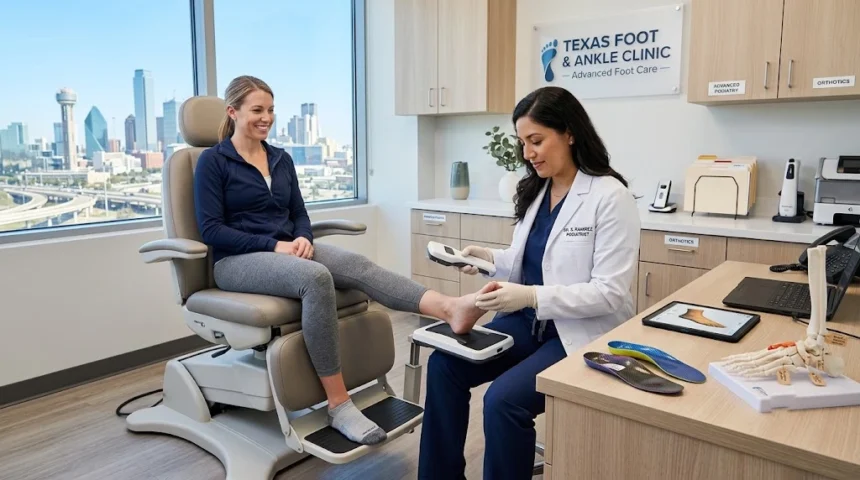
Podiatry treatments in Texas help residents manage foot and ankle pain through custom orthotics, plantar fasciitis care, diabetic foot exams, shockwave therapy, and minimally invasive surgery. A licensed podiatrist can diagnose your condition, create a personal plan, and help you stay active and comfortable throughout the year.
- Why Foot Health Deserves Real Attention in Texas
- Treating Plantar Fasciitis — The Most Common Heel Pain in Texas
- Custom Orthotics — Support Built for Your Specific Foot
- Diabetic Foot Care — A Critical Priority for Millions of Texans
- Bunion and Hammertoe Treatments — Real Solutions for Painful Deformities
- Shockwave Therapy — Non-Surgical Relief for Chronic Pain
- Ankle Pain and Sports Injuries — Care for Active Texans
- When Is It Time to See a Texas Podiatrist?
Your feet carry you through every part of your day. From morning walks to long shifts at work, they absorb the impact of thousands of steps. But when something goes wrong—a stabbing heel pain, a swollen joint, or a nagging ache that won’t quit—those steps become a real challenge. Texas residents deal with foot and ankle problems at high rates, driven by heat, active outdoor lifestyles, and a large population managing chronic conditions like diabetes. The good news is that today’s podiatry treatments give you real options. Whether you need something simple or something more involved, a board-certified podiatrist can map out the right path forward.
Why Foot Health Deserves Real Attention in Texas
Texas summers mean more time in sandals, flip-flops, and open shoes that offer very little support. That combination can trigger or worsen a range of foot conditions. Seasonal care data from podiatry clinics across South Texas shows that warmer months bring higher rates of fungal infections, blisters, and heel pain—all linked to footwear choices and long hours outdoors. On top of that, the Texas heat causes feet to swell more, which makes ill-fitting shoes even more of a problem.
Texas is also home to millions of people living with diabetes, a condition that directly affects foot health. Left unmanaged, diabetes can lead to nerve damage, poor circulation, open wounds, and in serious cases, amputation. Regular podiatric care is one of the most effective ways to stay ahead of those risks. Getting to a foot doctor before a small issue becomes a big one is always the smarter move.
Treating Plantar Fasciitis — The Most Common Heel Pain in Texas
Plantar fasciitis is one of the most common reasons people visit a podiatrist across Texas. It happens when the thick band of tissue running along the bottom of your foot becomes inflamed, usually from repeated stress or poor foot mechanics. The pain often hits hardest during your first steps in the morning or after sitting for a long stretch of time.
Treatment almost always starts with conservative care. Your podiatrist may recommend targeted stretching exercises for the calf muscles and arch of the foot. Supportive footwear and custom orthotics help redistribute pressure so the tissue can actually heal. Night splints keep the plantar fascia gently stretched while you sleep, which cuts down that sharp morning pain significantly.
When those approaches don’t fully resolve the problem, podiatrists use corticosteroid injections to bring down inflammation directly at the source. Some clinics also offer extracorporeal shockwave therapy for chronic cases—more on that below. The key takeaway is not to wait too long. Chronic plantar fasciitis changes the tissue itself, making it harder to treat. Untreated, it can alter how you walk and create secondary problems in your knees, hips, and back.
Custom Orthotics — Support Built for Your Specific Foot
Over-the-counter insoles from a pharmacy are made for general foot shapes. Custom orthotics are made for yours. Texas podiatrists begin the process with a detailed analysis of your foot mechanics—how your arch is shaped, how your foot contacts the ground, and where pressure builds up when you move. Some clinics use digital pressure mapping technology to get a precise picture of your foot function.
The resulting insert fits directly into your shoe and corrects the structural imbalances that cause pain. People with flat feet, high arches, or abnormal walking patterns see meaningful improvement with custom orthotics because the device addresses the actual cause of discomfort rather than masking the symptom. Whether you’re standing at a job site in Dallas, running in San Antonio’s parks, or managing a busy schedule in Houston, orthotics can make daily movement much more comfortable without any invasive procedures.
Diabetic Foot Care — A Critical Priority for Millions of Texans
Texas consistently ranks among states with the highest rates of diabetes. That makes diabetic foot care one of the most critical services a Texas podiatrist provides. Diabetes damages the nerves and blood vessels in your feet, which means small cuts or sores can go unnoticed and escalate quickly into serious infections.
Routine diabetic foot exams are the foundation of prevention. A podiatrist checks circulation, skin condition, nail health, and sensation at every visit. They look for early signs of neuropathy—the loss of feeling in the feet—and for wounds that haven’t healed properly. Clinics across the Dallas-Fort Worth area and Greater Houston use tools like the SUDOSCAN device to detect nerve and vascular problems before they turn into complications.
When wounds do develop, Texas podiatrists offer advanced wound care that includes debridement, specialized dressings, and in severe cases, reconstructive surgery to avoid amputation. Diabetic shoes and custom inserts are also part of the picture, reducing pressure on vulnerable areas and keeping circulation moving. The earlier a patient builds a regular care routine with a podiatrist, the better the long-term results tend to be.
Bunion and Hammertoe Treatments — Real Solutions for Painful Deformities
A bunion forms when the joint at the base of your big toe shifts out of place, pushing the toe inward and creating a bony bump that rubs against your shoe. Hammertoes affect the smaller toes, causing them to bend at an unnatural angle. Both conditions worsen over time without treatment.
Conservative care works well in the early stages. Wider shoes, protective padding, and custom orthotics take pressure off the affected joints and slow the progression. Corticosteroid injections reduce pain and swelling during flare-ups. For patients with diabetes or circulation issues, managing these conditions with a podiatrist is especially important because nerve damage can mask how severe the problem is getting.
When the deformity becomes too painful or limits daily life, minimally invasive surgery offers a clear path forward. Texas podiatry practices now perform bunion corrections and hammertoe repairs through small incisions, which means less pain, faster recovery, and minimal scarring compared to older surgical approaches. Many patients return to regular activity within a few weeks.
Shockwave Therapy — Non-Surgical Relief for Chronic Pain
Shockwave therapy has become one of the more widely used treatment options at Texas podiatry clinics, particularly for patients dealing with chronic heel pain and Achilles tendon problems that haven’t responded to rest or orthotics. It’s an option worth knowing about if you’ve been struggling for months without relief.
The treatment uses acoustic pressure waves directed at damaged tissue. Those waves trigger the body’s natural healing process by increasing blood flow and stimulating tissue repair at the cellular level. It’s FDA-cleared, non-invasive, and done right in the clinic—no surgery, no recovery time at home. Most patients complete three to five sessions spaced about a week apart.
Podiatrists in North Texas and the Greater Houston area use this technology for conditions including plantar fasciitis, Achilles tendinitis, heel spurs, and certain types of arthritis-related foot pain. For patients who want to avoid surgery, shockwave therapy is often one of the strongest options available and worth discussing at your next appointment.
Ankle Pain and Sports Injuries — Care for Active Texans
Texas has a strong culture of outdoor activity—hiking, trail running, cycling, and recreational sports are part of life across the state. That activity benefits overall health, but it also means foot and ankle injuries are common. Rolled ankles, stress fractures, and Achilles tendon injuries send thousands of Texans to podiatrists every year.
Board-certified podiatrists diagnose these injuries using imaging tools including X-ray, MRI, and ultrasound. Treatment depends on severity. A mild sprain may need rest, bracing, and physical therapy. A more serious tendon tear or fracture may require immobilization or surgical repair. Texas podiatry practices with sports medicine specializations also work with patients on injury prevention—evaluating gait, recommending sport-specific footwear, and identifying training patterns that repeatedly strain the same structures.
When Is It Time to See a Texas Podiatrist?
A lot of people wait too long. They assume foot pain is normal, that it will go away on its own, or that it’s just part of getting older. Early treatment is often what separates a simple fix from a long-term problem.
You should schedule an appointment when you experience heel pain that doesn’t improve after several days, pain that changes the way you walk, recurring ingrown toenails, any foot sore or wound that isn’t healing—especially if you have diabetes—or foot and ankle discomfort that limits your ability to work, exercise, or move through your day. Most Texas podiatrists don’t require a referral for an initial visit, and many practices accept Medicare, Medicaid, and a wide range of private insurance plans.
The range of podiatry treatments available to Texas residents today is broader and more effective than it has ever been. From custom orthotics to advanced wound care to minimally invasive surgery, you have real choices. Your feet work hard every single day—giving them proper care means staying mobile, comfortable, and active for years to come.