Most of us don’t think twice about how we spend our workday. Maybe you’re glued to a desk chair for eight hours straight. Or maybe you’re on your feet all day, ringing up customers, teaching a classroom, or working the floor at a hospital. Either way, your body is stuck in one position for far too long — and that comes with a price.
- Your Body Is Built to Move — Not Freeze
- What Happens When You Sit Too Long
- Standing All Day Isn’t the Safe Alternative Either
- The Hidden Circulation Problem Behind It All
- It’s Not Just About Your Legs
- Simple Habits That Actually Protect Your Body
- Why Exercise Outside of Work Still Matters
- When Leg Pain Is More Than Just Tired Legs
- Vein Treatment Has Come a Long Way
- Making Movement Part of Your Everyday Life
- The Bottom Line
We’ve built entire careers and daily routines around staying still. But your body wasn’t designed for that. It was built to move. And when it doesn’t get the chance to, the effects can creep up slowly — until one day you notice your legs feel heavy, your back aches, or your energy just isn’t what it used to be.
Let’s break down what’s really happening inside your body when you sit or stand for too long, and what you can do to protect yourself before small discomforts turn into bigger problems.
Your Body Is Built to Move — Not Freeze
Think about how your body actually works. Walking, stretching, bending, and climbing stairs all keep your muscles active, your joints loose, and your blood flowing the way it should.
When you take that movement away, things start to slow down:
- Muscles stay locked in the same position for hours
- Joints stiffen up from lack of use
- Blood circulation becomes sluggish
Here’s the part that surprises people: even if you hit the gym every morning, sitting or standing still for the rest of the day can still work against you. A single workout doesn’t cancel out eight hours of stillness.
What Happens When You Sit Too Long
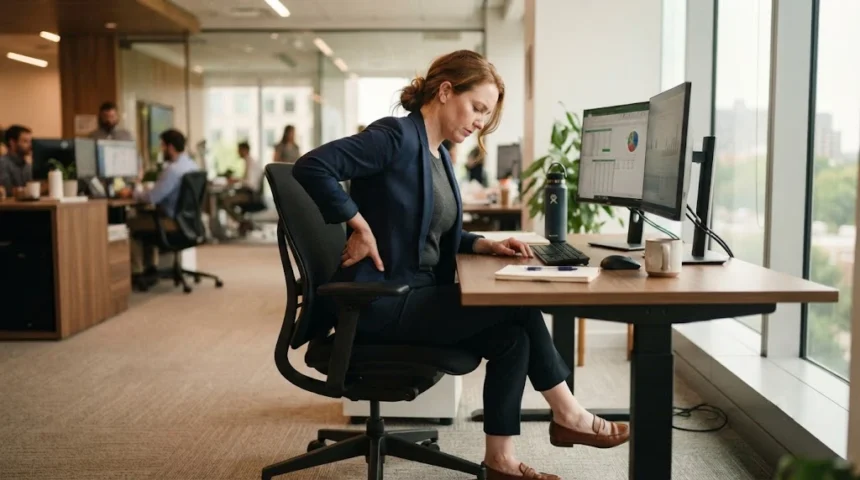
Sitting feels comfortable — until it doesn’t. After a few hours in the same seated position, your body starts paying for it.
Your hip flexors tighten up. Your core muscles go quiet. Extra pressure builds in your lower back. Slowly, your posture starts to slip, which often leads to a tight neck, stiff shoulders, and that nagging ache along your spine.
There’s also a circulation problem hiding beneath the surface. Your calf muscles are supposed to help pump blood back up to your heart. When you’re sitting for hours, those muscles barely get used. Blood flow slows down, and fluid can start building up in your lower legs and ankles — which is exactly why your feet might feel swollen by the end of the day.
Over time, this pattern can raise your risk for varicose veins and chronic venous insufficiency, especially if you’re already prone to circulation issues.
Standing All Day Isn’t the Safe Alternative Either
A lot of people assume standing is automatically better for you than sitting. It’s not that simple.
When you stand in one spot for hours without walking around, your legs take on constant pressure. Gravity pulls blood downward, and your veins have to work overtime to push it back up toward your heart.
Without regular movement, your calf muscles can’t do their job properly. Pressure builds inside your veins, and over time that can lead to:
- Aching or throbbing legs
- Swelling by the end of your shift
- Persistent fatigue
- Visible varicose veins
This is an especially common issue for people in jobs that demand hours on your feet — nurses, teachers, retail workers, factory employees, and restaurant staff all know this feeling well.
The Hidden Circulation Problem Behind It All
Here’s something most people don’t realize: healthy veins rely on tiny one-way valves to push blood upward, against gravity. Those valves depend on your calf muscles contracting regularly to work properly.
Whether you’re sitting or standing still for too long, that natural pumping action slows way down. Blood starts pooling in your legs, and pressure builds inside the veins.
At first, this might just show up as mild swelling or tired legs after a long day. But if it continues unchecked, it can progress into:
- Persistent heaviness or throbbing
- Itching or muscle cramps
- Visible, bulging varicose veins
Because these symptoms build up so gradually, it’s easy to write them off as “just getting older” or “part of the job.” But that’s not always the full story.
It’s Not Just About Your Legs
The damage from too much stillness doesn’t stop at your legs. It ripples out across your whole body.
Sitting or standing without movement throws off your muscle balance, which puts extra strain on your hips, knees, and lower back. Bad posture can trigger headaches, neck pain, and tight shoulders you didn’t even realize were connected to your desk job.
There’s a mental side to this too. Many people report feeling drained and foggy after long stretches in the same position — even on days when the actual work wasn’t physically demanding. That combination of physical discomfort and mental fatigue can quietly chip away at your focus, your mood, and your overall quality of life.
Simple Habits That Actually Protect Your Body
The good news? You don’t need a complete lifestyle overhaul to fix this. Small, consistent changes make a real difference.
Try building these habits into your day:
- Take a short walk every hour — even five minutes helps get blood moving again
- Stretch regularly to loosen tight muscles and improve flexibility
- Alternate between sitting and standing if you work at a desk (a standing desk converter makes this easy)
- Shift your weight and walk when you can if your job keeps you on your feet
- Wear supportive shoes to ease pressure on your feet and legs
- Stay hydrated and eat well to support healthy circulation from the inside out
None of these require a gym membership or a major schedule change — just a little intention throughout your day.
Why Exercise Outside of Work Still Matters
Regular exercise is one of the best tools you have for undoing the damage of a sedentary or standing-heavy job.
Walking tops the list here. It directly activates your calf muscles, which are essential for pushing blood back up toward your heart. Cycling, swimming, yoga, and strength training all help too — improving joint mobility, balancing out overworked muscles, and boosting overall cardiovascular health.
The key isn’t intensity. It’s consistency. A daily 20-minute walk will do more for your circulation long-term than an occasional intense workout squeezed in once a week.
When Leg Pain Is More Than Just Tired Legs
Feeling a little sore after a long day at work is normal. But there’s a difference between everyday tiredness and something more serious.
Pay attention if you notice:
- Persistent swelling that doesn’t go down overnight
- Ongoing aching or heaviness in your legs
- Skin discoloration around your ankles or lower legs
- Visible, bulging varicose veins
- Leg discomfort that starts interfering with daily life
These signs can point to chronic venous insufficiency, a condition that tends to get worse over time if it’s left untreated. Catching it early makes a real difference — a specialist can evaluate your circulation and figure out exactly what’s going on before it becomes a bigger issue.
Vein Treatment Has Come a Long Way
If you do end up needing treatment, there’s good news: vein care has advanced significantly in recent years.
Many procedures today are minimally invasive, performed right in an outpatient office with local anesthesia. Options like endovenous laser therapy, radiofrequency ablation, ultrasound-guided sclerotherapy, and ambulatory phlebectomy offer real results with much shorter recovery times than older surgical methods.
Diagnostic ultrasound also allows specialists to see exactly how blood is flowing in real time, which means treatment plans can be far more precise and personalized than they used to be.
Making Movement Part of Your Everyday Life
The most effective fix isn’t a single big change — it’s a mindset shift. Instead of treating exercise as something that only happens at the gym, look for small ways to weave movement into your regular day:
- Take the stairs instead of the elevator
- Walk while you’re on phone calls
- Stretch between meetings
- Park a little farther from the entrance
- Stand up while answering emails
None of these take much time or effort, but stacked together over weeks and months, they add up to real protection for your joints, muscles, and circulation.
The Bottom Line
Spending long hours sitting or standing might feel like an unavoidable part of modern work — but the toll it takes on your body is real. Reduced movement affects your muscles, joints, posture, circulation, and even your energy levels. And because these changes happen so gradually, it’s easy to ignore them until they start affecting your daily life.
The good news is that most of this is preventable. Regular movement, smarter workplace habits, consistent exercise, and paying attention to warning signs can go a long way toward protecting your long-term health. If something feels off — especially in your legs — don’t brush it aside. A quick evaluation now could save you from a much bigger problem down the road.
At the end of the day, movement really is medicine. Even small changes to how you move throughout the day can help you feel better, move easier, and protect your circulation for years to come.
Stay tuned to mashmagazine for more health, lifestyle, and wellness insights.