
How do I choose contents insurance in a flood zone? Check if flood cover is included or optional, review the policy’s flood definition and exclusions, confirm your contents sum insured covers all belongings, compare excess fees and waiting periods, and verify your property’s flood risk using council maps or emergency services data.
If you live in a flood-prone area, protecting your belongings becomes more than just a precaution — it’s essential. Floods can destroy furniture, electronics, clothing, and irreplaceable personal items in hours, leaving you with thousands of dollars in losses if your contents insurance doesn’t cover the damage.
Many Australians assume their home contents insurance automatically includes flood protection. That’s not always true. Some insurers make flood cover optional, while others exclude certain water-related events entirely. If you’re in a high-risk zone, choosing the right policy requires careful comparison and a clear understanding of what’s covered.
This guide will walk you through how to pick home contents insurance flood Australia policies that actually protect your belongings when water rises. You’ll learn how to assess your risk, compare policies, avoid common exclusions, and prepare for claims so you’re covered when it matters most.
Understanding
Home contents insurance covers your belongings — furniture, electronics, clothing, appliances, and personal items — but not the building itself. That’s covered separately under building insurance. If you’re renting, you only need contents cover because your landlord insures the structure.
In Australia, insurers define “flood” using a standard definition from the Insurance Council of Australia: the covering of normally dry land by water that has escaped or been released from the normal confines of a lake, river, creek, or other natural watercourse, whether or not altered by a reservoir, canal, or dam. This definition matters because it determines what your insurer will pay for and what they won’t.
Floods can happen fast. Heavy rain causes rivers and creeks to overflow, stormwater drains to back up, and water to pool across roads and yards. If you’re in a high-risk zone, that water can enter your home and ruin everything at ground level. Contents insurance with proper flood cover reimburses you for damaged or destroyed items, but only if your policy includes flood protection.
Insurers treat properties in flood-prone areas differently. They charge higher premiums, impose stricter exclusions, and sometimes refuse to offer flood cover at all. Understanding how your location affects your policy helps you compare options and avoid gaps in coverage.
Check Your Flood Risk and Its Implications for Contents Cover
Before you compare policies, find out if your property sits in a flood zone. State emergency services, local councils, and organisations like Compare the Market provide flood maps and risk databases. Enter your address and you’ll see whether your area has a history of flooding or sits in a high-risk catchment.
Your flood risk directly impacts your contents cover. Insurers use location data to set premiums, and properties in high-risk zones pay more. Some insurers decline to offer flood cover in certain postcodes, while others make it optional rather than automatic. If you’re in a moderate or high-risk area, expect higher excess fees and possible waiting periods before your flood cover becomes active.
Knowing your risk also helps you decide how much contents coverage you need. If water regularly pools near your home or if past floods reached your street, you’ll want a higher sum insured to cover everything you own. Some insurers, like AAMI, include flood cover as standard in their policies, but others require you to opt in and pay extra.
Take time to document your flood risk now. Walk around your property and note how close you are to creeks, rivers, or low-lying areas. Check whether your home sits above or below street level. Photograph your belongings and create an inventory with estimated replacement values. This preparation makes comparing policies easier and speeds up claims if flooding does occur.

How to Choose the Right Contents Policy
Comparing contents insurance policies when you live in a flood zone requires more than just checking the price. You need to examine the fine print, ask specific questions, and confirm your policy covers the events most likely to affect your home.
Start by confirming whether the policy includes flood cover for your contents. Many policies cover building damage from floods but exclude or make contents cover optional. Budget Direct, for example, requires you to add flood cover as an optional extra. Always ask the insurer directly: “Does this policy cover flood damage to my belongings?”
Next, review the policy’s definition of “flood” and check what events are excluded. Insurers often exclude damage from storm surge, rising sea levels, and water run-off that doesn’t meet the official flood definition. If your property sits near the coast, storm surge exclusions could leave you unprotected even if water enters your home.
Check your contents sum insured. This is the maximum amount the insurer will pay if you lose everything. List every major item you own — furniture, electronics, appliances, clothing, jewellery, tools, and sporting equipment — and add up their replacement cost. If you have high-value items like artwork or musical instruments, ask about “specified contents” cover to ensure they’re fully protected.
Excess fees and waiting periods also matter. Many insurers impose a 72-hour waiting period after you add flood cover, meaning any flood that occurs in those first three days isn’t covered. Excess fees — the amount you pay before the insurer pays the rest — can range from $500 to $2,500 or more in high-risk zones. Compare these costs across insurers to find the best balance between premium and out-of-pocket expense.
Premiums vary based on your risk zone, building type, and claims history. AAMI and other insurers adjust premiums according to location data, so two identical policies can cost different amounts depending on your postcode. Don’t assume the cheapest policy offers the best value. A low premium often means higher excess fees, more exclusions, or limited cover.
Use this checklist when comparing policies:
Ask the insurer directly whether contents flood cover is included or optional. Request the Product Disclosure Statement and read the flood definition and exclusions section carefully. Review your contents sum insured and ensure major items are listed with accurate replacement values.
Confirm whether the policy covers removal and replacement of damaged items, temporary accommodation if you’re renting, and clean-up costs after a flood. Compare at least two insurers and ask about any flood zone surcharge based on your property’s risk level. Check whether your claims history affects your ability to get cover or increases your premium.
One common mistake is assuming building cover and contents cover work the same way. A policy might include flood cover for the building structure but exclude flood damage to your belongings. If you’re renting, you only need contents cover, but you still need to confirm flood protection is included.
Practical Risk-Reduction
Contents insurance protects you financially, but reducing your flood risk helps keep premiums manageable and improves your chances of a smooth claim. Insurers favour policyholders who take proactive steps to protect their property.
Start by moving furniture and valuables off the ground. If your home has a history of flooding, place furniture on blocks or platforms that lift items above expected water levels. Store electronics, important documents, and photos in waterproof containers or move them to higher floors or off-site storage.
Check your home’s drainage system. Clear gutters, downpipes, and stormwater drains regularly to prevent water pooling around your property. Install backflow valves on drains to stop water from backing up into your home during heavy rain. Seal vulnerable ground-floor areas with sandbags or flood barriers when storms are forecast.
Document everything you own before a flood occurs. Photograph each room and create a detailed inventory with purchase dates and estimated values. Store this information in the cloud or off-site so you can access it even if your home floods. This documentation speeds up claims and helps you prove the value of damaged items.
After the 2021 eastern Australia floods, many homeowners discovered their contents were destroyed even though their building insurance covered structural repairs. Replacing clothing, furniture, appliances, and personal items cost thousands of dollars, and those without proper contents cover faced significant out-of-pocket expenses.
Insurers may refuse claims if they determine you didn’t maintain your property or if damage existed before the flood. Keep records of maintenance work, repairs, and upgrades to show you’ve taken reasonable care of your home.
What to Do If You Need to Make a Contents Flood Claim
Knowing how to file a claim quickly can make the difference between a smooth process and a rejected claim. Follow these steps as soon as it’s safe after a flood.
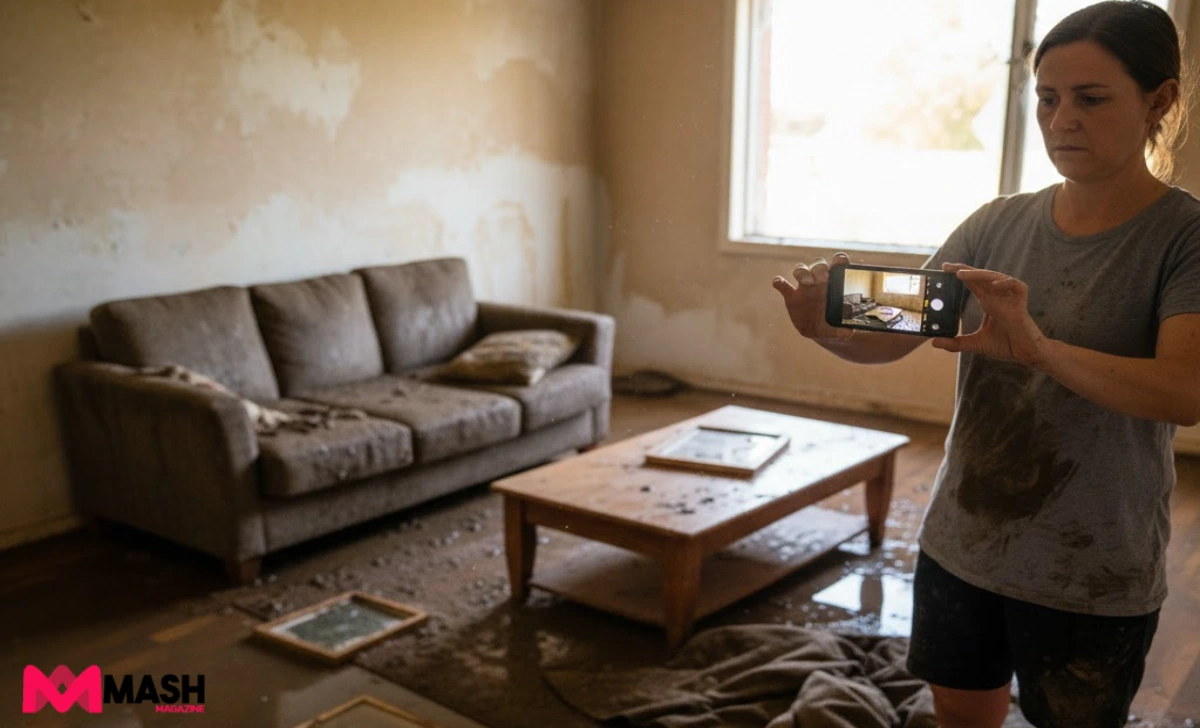
Secure your property and document the damage immediately. Take photos and videos of flooded rooms, damaged items, and water levels before you start cleaning up. This evidence proves the extent of the damage and supports your claim.
Contact your insurer as soon as possible. Give them your policy number, explain when and how the flood occurred, and describe what’s been damaged. Most insurers have 24-hour claims lines, so don’t wait until business hours to report the damage.
Complete all claim forms and provide proof of your contents’ value. Use your inventory list, receipts, and photos to show what you owned and what it cost. If you don’t have receipts, provide estimates based on current replacement prices. Keep damaged items if it’s safe to do so — insurers may want to inspect them before approving your claim.
Understand your excess and whether the insurer covers temporary accommodation. If your home is uninhabitable, some policies pay for short-term rental costs while repairs happen. Check your policy’s wording to see what’s included.
Be aware of exclusions that could affect your claim. Damage caused by storm surge, rising sea levels, or water that doesn’t meet the official flood definition may not be covered. Budget Direct and other insurers specify these exclusions clearly in their policies. If you added flood cover recently, check whether the 72-hour waiting period has passed. Claims filed during the waiting period are usually rejected.
Under-insuring your contents is a common problem. If you haven’t updated your sum insured in years, you might receive less than the full replacement cost. According to the Insurance Council of Australia, flood risk is reflected in higher premiums, and this also influences claim outcomes. Insurers pay based on your sum insured, not the actual cost of replacing everything you lost.
Keep a claim readiness checklist for the future. Maintain an updated inventory list with photos and receipts. Store important documents and backups off-site or in the cloud. Review your policy annually and adjust your sum insured as you buy new items.
Renting? Special Considerations for Contents Cover in Flood-Risk Zones
Renters need contents insurance just as much as homeowners, especially in flood-prone areas. Your landlord’s building insurance covers the structure, but it doesn’t protect your belongings. If a flood destroys your furniture, clothes, and electronics, you’re responsible for replacing them unless you have your own contents cover.
Many renters assume they don’t need insurance because they don’t own the property. That’s not true. Your belongings have value, and replacing everything after a flood can cost thousands of dollars. Contents insurance designed for renters covers the same items as homeowner policies — furniture, electronics, clothing, appliances, and personal items.
When choosing contents insurance as a renter in a flood zone, ask the same questions homeowners ask. Is flood cover included or optional? What events are excluded? Does the policy cover temporary accommodation if you need to move out while repairs happen? Your landlord won’t pay for your hotel room or alternative housing, so check whether your policy includes this benefit.
Renters should also clarify what “flood” means in their policy. Exclusions for storm surge, sea action, and water run-off apply to renters’ policies just like homeowner policies. If your rental property sits in a coastal flood zone, make sure you understand what’s covered and what isn’t.
Create a portable contents inventory you can update easily when you move. Photograph your belongings and store the images in the cloud. If you move from a low-risk area to a high-risk area, notify your insurer immediately. Your premium may increase, but failing to update your address could void your policy if you need to claim.
Renters often face the same exclusions and waiting periods as homeowners. If you add flood cover after signing up for contents insurance, expect a 72-hour waiting period before it becomes active. Plan ahead and add flood cover before storm season starts, not when rain is forecast.
Conclusion
Choosing the right home contents insurance flood Australia policy when you live in a flood-prone area can feel overwhelming, but breaking it down into clear steps makes the process manageable. Start by assessing your property’s flood risk using council maps and emergency services data.
Compare policies carefully to confirm flood cover is included, check exclusions and waiting periods, and ensure your sum insured reflects the true value of your belongings. Take proactive steps to reduce your risk by storing valuables safely, maintaining your property, and documenting everything you own.
If you haven’t reviewed your contents insurance recently, today is the right time to start. Floods don’t wait for perfect timing, and the cost of replacing everything you own far exceeds the price of proper insurance. Whether you’re a homeowner or renter, protecting your belongings with the right policy gives you peace of mind when the water rises.
Compare at least two insurers, ask specific questions about flood definitions and exclusions, and keep your policy updated as your contents change. Your future self will thank you when you’re covered and ready if the next storm hits.